WELCOME TO WINNIPEG DREAMS

WELCOME TO WINNIPEG DREAMS
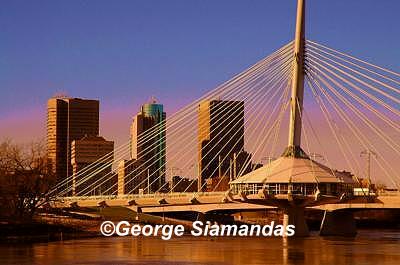
Winnipeg Skyline

Sunday, January 28, 2007

Sunday Streetcars

Sunday Streetcars

Observance of the Sabbath Vs Leisure

By George Siamandas

Winnipeg streetcars were finally permitted to run on Sundays for the first time on July 8, 1906. Until then everyone walked or used a bicycle to get around on Sunday. Across Canada, excepting Quebec, there were few things one could do on Sundays. Churches that wanted to keep the Sabbath had always opposed Sunday operation of streetcars. They wanted to give the street railwaymen time to worship. After all they were already working 10 hours a day, six days a week.

THE FIRST SUNDAY OPERATION
The first Sunday operation had been a one-time-only special occasion. It was the funeral of carman Patrick Mullan held on March 13, 1904. The cortege required 10 streetcars and thousands attended the passing of the cars through the downtown.

HOW SUNDAY OPERATION CAME INTO BEING
There had been several proposals to City Council and the legislature to permit Sunday operation of streetcars since the turn of the century. The issue was debated in letters to the editor of the Free Press. Some argued that with places to go that there would fewer drunks. Others argued that where this had been introduced, such as in Toronto, church attendance went up 20%. Sabbatarians argued that those cities that had done this were rapidly on their way to degeneration and ruin.

It was put to the public a number of times. In Dec 2, 1902 Sunday operation was narrowly defeated 2,370 to 2,166 in a civic vote.

SUNDAY OPERATION FINALLY APPROVED
Finally on June 28, 1906 it was put to another public vote. The Free Press was a staunch advocate and said that Sunday operation was a "humanitarian necessity in this city of magnificent distances." And that "people interested in vice do not need to go into the country to gratify their inclination towards wickedness."

The results were 2,890 for and 1,647 against Sunday operation. Winnipeggers were jubilant and took their first chance to head to the parks, completely jamming the cars assigned to that first day.

The cars operated from 7:00am to midnight and the fare was 8 tickets for 25 cents. Out of respect for Sunday the speed would be held to 6 miles an hour near churches and the gong would only be sounded in emergencies. Streetcars rolled down a double track running down the middle of Broadway Avenue with its young elm saplings lining the edges of the wide centre Boulevard.

Those that did not go to the parks delighted in joy riding around for hours, enjoying tours of the city.


WHERE DID PEOPLE GO ON SUNDAY?
It was just in time for newly opened Assiniboine Park. People enjoyed taking the open streetcars to other parks like River Park, and Elm Park.

They also went to Happyland Park, which opened in spring 1906. Happyland was located on the south side of Portage Ave between Sherburn and Garfield. It lasted 14 years and then became Dominion and Aubrey streets. The old bus turn around remains on Aubrey St.

In 1907, a special line ran into St Charles Golf Club. For many years the streetcar was the only way of getting there and to all the golf courses. And right into the 1940s, people would carry their clubs with them onto the streetcars.

INVESTIGATING THE LEGISLATIVE


INVESTIGATING THE LEGISLATIVE
BUILDING SCANDAL


By George Siamandas


ORIGIN OF THE SCANDAL
The Roblin Conservative govt had just been narrowly re-elected. But Manitoba was near economic paralysis. In 1914 because of the growing scandal over the cost overruns, Premier Roblin was considering abandoning the entire capital budget for the year. Roblin's govt tried to muddle through till the Lieut. Gov compelled him to either resign or agree to an enquiry. The Winnipeg Tribune promptly lauded Lieut. Gov Douglas Cameron for his backbone. Roblin chose not to resign from govt and instead decided to take his chances with the Royal Commission's report. The three judges appointed to investigate were Chief Justice Thomas Mather, Justice Donald Alexander Macdonald and Justice Hugh John Macdonald.

Missing Witnesses
Several crucial witnesses were not available to the Commission. Provincial Architect Victor Horwood went to the United States to be treated for a serious illness. William Salt who had kept records of construction had also disappeared.

The Salt story sees the man who had been responsible for documenting the foundation work disappearing just before the Enquiry being appointed. He flees to Minneapolis where he stayed at the Radisson Hotel. Over the next two months, Salt will move to Chicago, back to Minneapolis, then Denver. All at the behest of the govt which did not want him to return to testify.

Over the course of two months Salt would be offered $2,000 which became $10,000. His new name was William Malcolm and an agent was sent to deliver the hush money to him in Denver. Staying overnight in Omaha, the courier claimed he was robbed of the $10,000. New money was found for Salt and the entire affair cost the govt $24,030. In the end Salt gave his testimony to the Commission in Minneapolis.

VICTOR HORWOOD
Horwood the provincial architect of the day became embroiled in a series of efforts to hide facts, dissuade witnesses, much out of character for the respected architectural designer. Horwood offered to take the full blame and go to jail.

THE ROYAL COMMISSION DISCOVERED
1. The commission found that the bidding process was not followed. Contractor Thomas Kelly missed the tender due date. He saw the only bid for the Legislature Building construction contract presented by Contractor Peter Lyall in a meeting with Roblin. Kelly got a day's extension on the tender and resubmitted his original bid of $3.2M bid with one for $2.86M just undercutting Lyall's bid.

2. Dr Simpson who was the party's fundraiser had been siphoning funds for the 1914 election by asking Kelly to inflate costs of elements of the legislative building. The commission found overcharges amounting $822,963.84.

3. Victor Horwood's testimony was found to be truthful. The legislative building's construction was found to be sound.

THOMAS MATHERS
Mathers would later present a major paper to the law Society's 1920 meeting on what else: Ethics and the Law. Mathers was considered a solid man. Previously a journalist, Mathers studied law in Manitoba in 1884 and became a successful lawyer and served as an alderman in the 1890s. Hugh John Macdonald was a Tory but he was one known to be fair.

Winnipeg's Carnegie Libraries


Winnipeg's Carnegie Libraries

By George Siamandas


HOW WINNIPEG GOT ITS FIRST LIBRARIES
Selkirk Settlers and Hudson Bay men like Peter Fiddler were the first contributors to Winnipeg's libraries. Fidler donated 500 books upon his death in 1822. The Manitoba Scientific and Historical Society was the founder of what later became the Winnipeg Public Library. In 1881 2,500 books were borrowed in Winnipeg.


WINNIPEG'S FIRST LIBRARY
In 1905 the Carnegie Library was built at 380 William Ave at a cost of $100,000. It was opened by Earl Grey on Oct 11, 1905. Built of native Manitoba limestone, the William Ave library was designed by Samuel Hooper. The man that made this and two other branches possible was Andrew Carnegie, the noted philanthropist who donated $75,000 towards construction of the William Library.

Carnegie helped with another $39,00 for an addition, and in 1915 paid the total cost of the Cornish and St. John's Libraries. The new libraries were the result of the initiative of provincial Librarian J. P. Robertson who wrote to Carnegie pleading for the same kind of assistance that had made the Ottawa library possible.

ANDREW CARNEGIE
Carnegie was Scottish born and lived between 1835 and 1919. In a classic rags to riches story, he made his fortune in railroads and oil and steel enterprises. His philosophy was that the best kind of assistance one could offer was to help people help themselves. Of the $330 million that Carnegie donated, more than $56 million went to the establishment of 2,507 libraries around the world. One hundred and Twenty-five were built in Canada at a cost of $2,556,660. He also helped colleges, and supported cultural and research grants.

His designs were different from the private libraries in that they were open and accessible. The William Street Library proclaims above its doorway "Free to All." In Carnegie's libraries, children were encouraged to attend and you could look through the shelves and find your own books.


STAGNANT DECADES
There was a boom in demand in the 1920s and branch stations were being set up in grocery stores, drug stores and fire halls. Bookmobiles were started in 1953. But in the late fifties money by-laws for the establishment of branch libraries were defeated one after the other. The city instead decided to create four modest branches in the 1960s which cost under $75,000 each: the River Heights, Downtown, McPhillips and the West End. In 1972 the City built the new Central Library on Graham Ave at a cost of $10 million.

IMPORTANTANCE OF LIBRARIES
For both rich or poor libraries have always played an important community building role in Winnipeg. Libraries have served as neighbourhood information centres.

They help create an atmosphere for learning. They are places children can explore their interests, study and be exposed to a wealth of information. As a teenager I can remember many a winter day studying at the William Street Library while the steam heat radiators hissed and popped in the background.


TODAY'S LIBRARY
Today there are 21 branches which last year circulated 5.6 million materials from a collection of 1.6 million items. Three hundred thousand people hold library cards. And last year they answered 413,000 information questions.

But their role is changing rapidly with technology. Now the building is not important, nor is going to the building itself necessary. And the book of the future will become a CD Rom, a database or a computer network.

THE 1826 FLOOD


THE 1826 FLOOD

After the Deluge Some Settlers Left While Others Stayed

By George Siamandas

1825 A VERY GOOD YEAR
It had been a very good year at Red River. The community was growing and upgrading itself. Forty-two new homes were built in six months. The severe mouse infestation had been the only discouraging event.

HARSH WINTER
The problems had begun during the winter. There had been a giant snow during December 1825. The Metis and Indians wintering in Pembina were near starvation. Ross visited Pembina in February and saw it first hand. A relief effort by individuals and the HBC sent many dog teams south with food and supplies. But many perished, especially in the harsh winter that year. Those that were found alive had devoured their horses, dogs, raw hides, leather and their shoes. The winter continued to bring much snow and temperatures reaching -45. The ice was five feet seven inches thick.

THE WATER RISES
On May 2 the water rose 9 feet in 24 hours. On May 4 the river overflowed its banks. On the 5th all the settlers abandoned the colony seeking higher ground. The river would rise for 20 days and in places the settlement had a depth of water estimated at 16 feet.

What did they save? First came the cattle then the grain, furniture and utensils. The water reached so high people had to break through the roofs of their houses to salvage what they could. Meanwhile ice flows cut everything in their path.

ROSS'S ESCAPE
Ross had a boat ready behind his house on he Red River at Point Douglas. As they got into the ark their belongings were flushed out of the house, as he was unable to close the door. They made way to a barn that was above water and joined a group of 50 people trying to escape the sudden waters. They fled west along the Assiniboine to Sturgeon Creek. The water continued to rise till the 21st. It was not until June 15th that they could return. Only one life was lost. But the mosquitoes after were unbearable.

STAY OR GO?
On May 22 the men called a council to consider whether they should move. Opinion at Red River was divided. The differences between the De Meurons and Scottish settlers became quite marked. The De Meurons were mercenaries who had fought in the war of 1812 had been brought to Red River by Selkirk in 1816 to help keep the peace.

Ross talks critically of the De Meurons who stole their cattle and gathered their floating possessions selling them back to the settlers at high prices. On June 24, 1826, 243 Swiss De Meurons, or half the colony, left for the United States. The Swiss were encouraged on their way with free food. They would eventually settle on the Mississippi.

The Scots however vowed to stay. Not so easily chilled by disappointments, they would start again on bare ground. Having survived fire, famine, warfare, grasshoppers and now a devastating flood, they still saw their future here. And here they would build their futures, in defiance of all obstacles. By 1830 the community had been completely re-established with 204 new houses being built.

ROSS' ANALYSIS OF THE FLOOD
The previous fall had been wet; the winter saw lots of snow. There was a sudden melt, and fanned by strong south winds, the ice flow blocked the path to Lake Winnipeg. When the ice broke up at Lake Winnipeg, the flood eased at Red River.

Ross closes by saying what has happened once may happen again. Mr. Nolin who had come to the are in the 1770s says that in 1776 the flood was even higher. Other bad flood years according to the Indians included 1790, and 1809. Ross would also live through the almost as bad 1852 flood.

Friday, January 26, 2007

Winnipeg is Closing Community Centres


Winnipeg is Closing Community Centres
The City of Winnipeg is now closing small neighbourhood community recreation centres and replacing them with mega-centres that serve much larger areas expecting everyone can get to them by car. It does so when a building is in bad need of repair and when there are not enough community volunteers to keep it going. Both are unfortunate circumstances. This is a shame as it defeats the original premise of a community centre being very local and close enough for young kids to walk to. This mega-centre approach works in suburbs but does not serve the needs of older inner city communities. Winnipeg City Council and the Mayor should stop seeing the problems of other people and solutions with the limits of their own eyes.

Monday, January 22, 2007

A Short Winnipeg History

Winnipeg History

(From various sources including City of Winnipeg website)

Winnipeg
Archeological evidence suggests that people first gathered there to trade over 6000 years ago. In 1738, Pierre de La Verendrye began the fur trading settlement at the junction of the Red and Assiniboine Rivers. The settlement, known as the Red River Colony, became a hub of the fur trade until the 1880s when grain production became more important in Western Canada. This is our story about the beginnings of our city and the historic Exchange District.

The Beginnings
In 1862 Mr. McKenny built his store where the corner of Portage and Main St. are today. In 1866 the name Winnipeg was first used for the area around Mr. McKenny's store. Winnipeg is the Cree name that means "Muddy Water". By 1872 Winnipeg had swallowed up Upper Fort Garry. People came to Winnipeg because it was close to the Hudson Bay Post. Lots of soliders came to guard the fort and many soldiers stayed to start farming. The stores began to supply settlers with seeds, tools, and glass
for houses. Farmers planted wheat and other grains. Winnipeg was the place where people bought and sold grain. People in Winnipeg bought and sold land to the settlers. By 1880 there were 57 different companies that bought and sold grain. In 1870 there were 30 buildings in Winnipeg. By 1873 there over 900 buildings in Winnipeg.

How people came to Winnipeg
The first people came by boat along the fur traders' routes from Churchill. People tried to build a wagon road from Fort William to Winnipeg but they only got 40 km. in 11 years. The Dawson Road finally was opened in 1871. Lots of people came on the railway after it opened. More buildings were built for all the people. Winnipeg became the most important city in Western Canada. Companies or banks made big buildings on Main Street. *We saw some of them on our tour of the Exchange District.

Immigration
Winnipeg needed a large, growing population. They needed to tell people in other places about Winnipeg. They put articles in newspapers and sent books about Western Canada to the libraries in Ontario. They sent a display to the Ontario Exhibition in 1882. They had a tour and lunch for Ontario reporters and train conductors so that they would tell people about Manitoba. The new city advertised in England and Europe with maps and pamphlets in 10 different languages and Exhibition vans travelled to many different countries. In 1888, the city hired immigration agents to meet the trains and encourge people to stay and farm near Winnipeg. By 1896, thousands of immigrants were coming to the west.

Growth of the city
Main St. was the most important street by 1873. Portage and Main were both very wide so the Red River carts could travel side by side and avoid the ruts. Notre Dame was supposed to be the second most important street. In 1875 Portage and Main had all of the businesses. In 1882 all of Lower Fort Garry except for one gate was torn down. In 1890 most banks were around City Hall. In 1906 a new Grain Exchange building was opened at Portage and Main. The banks moved closer to the corner too. In 1914 there were twenty-five buildings used for banking and grain business on Main just north of Portage. Many companies sold things to stores in other places. They needed warehouses with lots of space for loading and unloading so most built west of Main Street. There were also places that made clothes, cigars and stores that sold saddles (saddleries). There were more than 60 hotels between the CPR and CNR stations. In 1905, the Eaton's store was built and other stores were built on Portage
Avenue near it.

Around the early 1900 people started coming to Winnipeg for a better life. Many of the immigrants came from Europe. Some of the countries were Great Britan, Scotland, Poland, Germany, Russia, and Scandinavia.

Upon arriving to Winnipeg, immigrants had to endure many barriers and hardships. They lived in a shed for seven days with very un- pleasant conditions. Men, women, and children arrived without money, food, shelter, and most importantly without speaking a new language.

After leaving the immigration shed families were reunited with their own kind of people in other parts of the city. Beside the C.P.R. tracks in the North End. The Jewish, the Polish, Germans and Scandinavians started to make their homes. The British and the Scottish made their homes in the South End.

The immigrants needed to make a living. The men worked in heavy industry such as iron, bridge and steel factories. In 1911, 3500 men worked for the C.P.R. station. They worked very long hours at hard labour jobs for low wages. The women worked in clothing factories or sweat jobs in the Exchange District. While their children went to public school to learn English and to get an Canadian Education. The children would return home and find themselves alone until mom and dad returned from work. Many families spilt up during these hard times. But many families stayed together and continued to work hard for a better life in Winnipeg.

HENRY NORLANDE RUTTAN


HENRY NORLANDE RUTTAN

Winnipeg's First City Engineer

By George Siamandas


Henry Norlande Ruttan served as Winnipeg's city engineer from 1885-1914. He was born in Coburg Ontario in 1848. His father had developed heating and ventilation systems used in buildings and railway cars. Ruttan learned engineering on the job and did not attend a university. This was with the Grand Trunk Railway starting in 1868. He worked with Sanford Fleming who was building the TransContinental from Quebec to the Maritimes. Starting in 1874 Ruttan built the western leg of the railway.

In 1880 Ruttan began his own engineering business in Winnipeg working as a consultant on railways, and the needs of a rapidly growing municipality. In 1885 he was appointed city engineer. He was an honest man who resisted the corruption of the day. His greatest gifts to the city are the James Avenue Pumping Station and the Shoal Lake Aqueduct.

Ruttan was a staunch proponent of public ownership of utilities, including the city's own low rate power system, its own quarry, and asphalt paving plant. Winnipeg's sewage system also owes a lot to Ruttan. It helped reduce Winnipeg's atrocious death rate.

Ruttan designed Winnipeg's first artesian well system in 1900, which gave the first pure water for decades. But its volume was inadequate to serve the whole city (The north end did not have water at this time). And if a big fire broke out the pressure was inadequate.

By 1900 the Red was too polluted and in 1904 when a big fire broke out and river water was used it ended up polluting the water supply causing a typhoid outbreak. It would not be till 1919 that all Winnipeggers could have pure and abundant water.

Winnipeg was growing rapidly. Massive stone warehouses with wooden post and beam construction were springing up all over the warehouse district. The trade they did in supplying all of western Canada was so good they kept growing and new firms wanted to expand into Winnipeg. The major problem they were facing were Winnipeg's high fire insurance rates because of the reduced ability of the fire department to fight fires.

There simply wasn't enough water coming out of the fire hydrants to do the job. The answer a high pressure pumping station called the James Ave Pumping Station. When complete it became the pride of the City Waterworks and Fire Department and was partly responsible for the construction of additional warehouse capacity.

Most of the $1,000,000 cost in 1906 was raised from taxing downtown businesses. When finished it had the capacity to create pressures of 300 LB per square inch pushing 9,000 gal per minute and was the largest such plant in the world. Initially it drew water from the Red River and supplied water for drinking as well as fire fighting. But by the time the Shoal lake Aqueduct was completed it drew this fresh supply of water.

It’s a living museum of how the city's equipment and operations functioned 90 years ago. There is nothing else quite like it in North America. In 1962 the engines were converted to natural gas.

Col Ruttan also had a distinguished military career, which resumed during WW1. He had fought against the Fenians in 1866, was Captain of the Little Black Devils in 1883, and served in the 1885 Saskatchewan Rebellion. Ruttan died in 1925 at his home at 180 Westgate.

Ruttan served as head of the Canadian Society for Civil Engineers and was one of the best known engineers in Canada. At his retirement dinner held at the Fort Garry in 1914, Ruttan was declared "the supervising genius of Winnipeg's expansion."

According to Dr Norman Ball of the National Museum of Science and technology: "In his daily work he stood as symbol of strength, staying power and confidence."

"Ruttan left Winnipeg a much better place than he found it. And gave it a yardstick by which to measure all other city engineers."