WELCOME TO WINNIPEG DREAMS

WELCOME TO WINNIPEG DREAMS
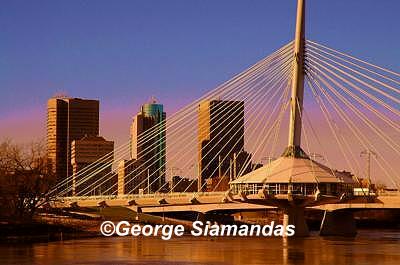
Winnipeg Skyline
Showing posts with label The Future of Winnipeg. Show all posts

Sunday, March 4, 2007

Welcome to Winnipeg Dreams


Welcome to Winnipeg Dreams
This site is devoted to a discussion of ideas and proposals for Winnipeg's future. Feel free to review the ideas presented here and add your views, suggestions, and dreams for a better more vibrant Winnipeg. Are you interested in improving downtown? Improving Portage Avenue? Better libraries? A better Assiniboine
Park? Whatever your suggestions, proposals or wishes post them here.

The brief historical articles that follow are intended to provide a perspective on the many Winnipeggers and Manitobans who came before us and who dreamt and built many features of the city we enjoy today.

Sunday, February 4, 2007

DOWNTOWN WINNIPEG PLANNING

DOWNTOWN PLANNING
The problem with most of the redevelopment strategies is that they are focused on attracting people that have little reason or interest in going downtown, while almost totally ignoring those that are downtown. For decades, downtown Winnipeg has been a constantly evolving place for the immigrant whether from Europe, Asia, Africa or aboriginal reserves.

Portage Place sought to attract the suburban housewife who never came. Meanwhile it tries to keep out the unsavory people who are there every day: the disadvantaged and the aboriginals. It’s time that downtown began to be planned for its actual residents. Housing, entertainment, education facilities should be planned for those who are there. This might be a hard for city fathers and planners to accept as it might seem like giving up.

Closing Portage and Main was about getting suburbanites home faster, and enticing a developer to invest in underground parking and shopping so that the workers didn’t really have to leave their Portage and Main cocoon. The towers of Portage and Main are an isolated enclave of people who come to work and then beat a quick path home. Should downtown continue to be planned for them when they really refuse to be its street citizens?

All downtown development began with a sense that in the late 1950s early 1960s that Winnipeg was an unprogressive wasteland that had seen virtually nothing new since World War 2. The wish to do something was great. So Winnipeg aped what other cities had done without considering its unique cultural mix or how quickly suburban growth would permanently change the future potential of downtown.

So here we are again. Planning for people who have since fled the downtown, while ignoring its real citizens. Time for a reality check. Unless we are happy “trying to make holes in water.”

PORTAGE AND MAIN CLOSURE


PORTAGE AND MAIN CLOSURE

The following are excerpts from the documentary Dreams of Castles in the Sky:

The closure of Portage and Main to pedestrians has raged in controversy for 25 years.

CURRY MCMILLAN
Without pedestrians crossing Portage and Main it lost something. A number of people said that when they put the barriers up you took away the heart of Winnipeg.

DEBRA JOHNASON YOUNG
In cities that feel vibrant you see the people on the street. When you take them off the street it looks empty.

ARTHUR MAURO
I personally feel Portage and Main should be opened its perhaps the great intersection in Canada.

DOUG CLARK
There is no question about it is the one icon of Winnipeg that is known more than any other place or location.

ARTHUR MAURO
I think there are points at which traffic flow of vehicles ought not to be the deciding factor of the character of a place. Where there is a will there is a way.

DAVID ASPER
When they put the barricades up at Portage and Main it was part of an urban planning trend to try to move traffic in and out of the centre of the city faster. What I think experience has shown in the re-energization of downtown, is actually, congestion works better. It makes people feel safer and downtowns aren't freeways. My view is that we should reopen the intersection to pedestrian traffic and bring people back up above ground.

LAURA FURNIVAL
With the opening of the concourse we needed to be where the traffic was. Our customers said we don't like it down there; we don't like to bank underground. We want to go upstairs so we made a decision as a company to listen to our customers; we moved back upstairs.

Plans are underway to reopen the corner to pedestrians and to find ways to celebrate the corner. Only one building owner is opposed.

It's about time. Let's get on with it.

Friday, January 19, 2007

Winnipeg's Fabulous Decade


WINNIPEG'S PERIOD OF UNSHAKEABLE OPTIMISM

By George Siamandas

INTRODUCTION
As we look forward in this new century, we pause to look back a century to when a new era was unfolding for
Winnipeg. What was it Winnipeg had then? What can we learn from that fabulous period? And what can we use in Winnipeg's next century?

WINNIPEG IN 1903
At the beginning of the century Winnipeg reached forward, and it looked proudly at what it already had become in barley 30 years as a city. From a "desert of snow" to becoming the third largest Canadian City.

Winnipeg had survived and prospered after the 1881-1882-land boom and bust. And while in the early 1880s Winnipeg had a population of 25,000, several thousand still lived tents.

By 1900 our population was 42,000 in the inner city alone. More than a third had been foreign born and half was from Britain.

RAILWAYS, WAREHOUSES, GRAIN & BANKS
Winnipeg
had railways and warehouses. In the first nine months of 1903 108,000 settlers came through town on their way west.

There was the Grain Exchange and burgeoning agricultural industry. And a booming financial district. Business was so good the banks of the early 1900s were all replaced by the beginning of WW1. Even larger and more opulent and faced in terra cotta, granite and local limestone, they were now as good as those in New York or London.

Banks, real estate companies, merchants, and shops formed a continuous ribbon of commerce equally on both sides of Main St from the St Boniface bridge to the CPR tracks.

A MODERN CITY
Winnipeg boasted a water supply, three fire stations, and a fine new Carnegie Library. There were 125 miles of paved roads and 179 miles of plank sidewalks. Seventy miles of sewers and 80 miles of water mains served from artesian wells.

Winnipeg boasted of its wide main streets set at 133 feet across. Three beautiful parks with plans to buy an old dairy farm and turn it into Assiniboine Park. There were 18 public schools and several more private ones. And the faithful had 60 churches and a dozen faiths. And they were churchgoers then. Crime was virtually none existent.

THE FUTURE IN 1900
Winnipeg's first skyscraper, the Royal Tower was about to be built. And there was talk of a giant new store to be built by Eaton's on Portage Ave.

So much of the future was being planned on Portage. Banks and the Post Office were buying land and planing their moves to a Portage Ave address.

A THRIVING CITY
In the decade between 1905 and 1915 Winnipeg's population tripled in size. In this ten-year period banks, financial firms, insurance companies, and private investors built some of the finest architecture in North America.

We would plan a water supply system that would last for centuries to supply more than a million people. Our telephone system would become a public monopoly and so would the future electrical needs for a bustling metropolis. Everything was planned to be first class.

SELLING THE BOOM TOWN
It was a period of unshakeable optimism. And of aggressive and competitive promotion of Winnipeg.

Winnipeg's Industrial Development Bureau fielded 57,000 enquiries between 1907-1910, sending out 2 million pieces of literature, 2,000 photos, 1,000,000 lines of copy on Winnipeg themes to national and international publications.

By 1913 Winnipeg was a metropolis. Its growth and prosperity was unrivalled in Canada. What is remarkable is that so many of these buildings survive today.

TODAY
The question is what are we planning for this century that will be noteworthy when Winnipeggers look back?